Mario Vargas Llosa
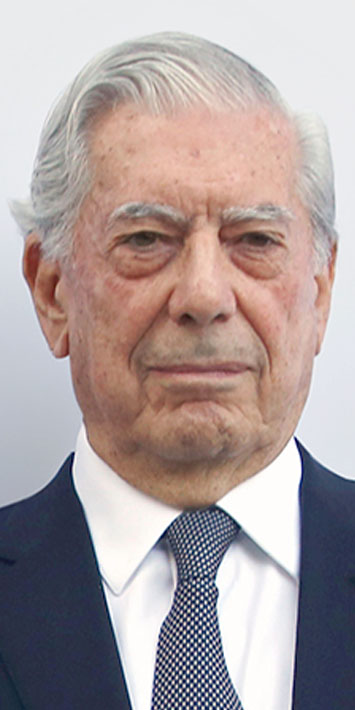
Mario Vargas Llosa is one of the most important figures in modern Spanish-language literature. A Peruvian novelist and essayist, he is known for his complex narratives and exploration of political and social realities in Latin America.
Why Mario Vargas Llosa Matters in Spanish Literature
Vargas Llosa played a central role in the Latin American literary boom of the 20th century. His work examines power, society, and individual freedom, often through intricate storytelling and multiple perspectives.
- Winner of the Nobel Prize in Literature in 2010
- Key figure in the Latin American literary boom
- Explores themes of power, resistance, and social conflict
- Works translated and studied worldwide
What Makes His Writing Unique
His novels are known for their structural complexity and deep analysis of society. He often combines different timelines, perspectives, and narrative voices within the same work.
- Multiple narrative layers and shifting perspectives
- Strong political and historical themes
- Detailed portrayal of Latin American societies
- Blend of realism, satire, and psychological depth
Notable Works to Explore
These novels are among his most influential and represent different aspects of his style and themes.
- La ciudad y los perros
- La guerra del fin del mundo
- La fiesta del chivo
- Conversación en La Catedral
Is Mario Vargas Llosa Suitable for Spanish Learners?
His work is not recommended for beginners or intermediate learners. The language, structure, and themes require a high level of comprehension.
- Advanced vocabulary and literary style
- Complex sentence structures
- Cultural and historical references
- Requires sustained reading focus
When to Read Authors Like Vargas Llosa
At SpanishBlackbelt, this type of literature is considered part of advanced, mastery-level development. It is not included in earlier stages, where the focus is on building practical conversational skills.
For learners who have reached a high level of fluency, reading Vargas Llosa can deepen understanding of nuanced language and expose you to sophisticated cultural and political themes.
How Literature Supports Advanced Spanish
At an advanced level, literature becomes a tool for refining language rather than building it from scratch. It allows you to engage with more abstract ideas and complex expression.
- Expands nuanced and abstract vocabulary
- Improves comprehension of complex narratives
- Develops sensitivity to tone and style
- Provides insight into Latin American history and culture
The Role of Conversation at the Advanced Level
Even at this stage, reading alone is not enough. Understanding complex texts does not automatically translate into the ability to communicate clearly and naturally.
Discussing literature with a native Spanish-speaking tutor helps transform passive understanding into active language use, reinforcing both comprehension and expression.
A Balanced Approach to Mastery
Mario Vargas Llosa’s work offers a rich experience for advanced learners interested in literature and culture. However, it is most effective when combined with continued speaking and listening practice.
This balance allows you to engage with Spanish at a deeper intellectual level while maintaining the ability to communicate effectively in real-world situations.
Biografía
Mario Vargas Llosa nació en una familia de clase media en 1936 en Arequipa, la segunda ciudad más grande de Perú. Cuando todavía era muy pequeño, los padres de Vargas Llosa se divorciaron y él se mudó a Cochabamba, Bolivia con sus abuelos maternos. Su madre le ocultó la verdad sobre la separación contándole que su padre había muerto, hasta que un día, en 1946, su padre apareció inesperadamente y se llevó a Mario con él. Esta abrupta revelación ejerció una gran influencia en su obra posterior. La vida junto a su padre le hizo descubrir un mundo más duro definido por el autoritarismo, el miedo, la injusticia y la violencia. Durante este periodo, empezó a leer a Dumas y Víctor Hugo, y comenzó sus estudios de leyes y literatura en Lima. Antes de terminar la universidad ya había iniciado su carrera literaria con la publicación de sus primeras historias cortas, “Los jefes” y “El abuelo”, al tiempo que trabajaba en dos periódicos peruanos.
En 1963, publicó su primera novela, “La ciudad y los perros” con una gran acogida. Traducida en más de doce idiomas, describía los esfuerzos de la vida adolecente por sobrevivir en un entorno hostil y violento. Durante algunos años vivió y trabajó en distintas ciudades europeas y comenzó a dar conferencias por todo el mundo.
Siempre rodeado de una intensa actividad política y comprometido con la ideología política, en 1990 presentó su candidatura para la presidencia de Perú, pero perdió contra Alberto Fujimori. Pocos años después, fue galardonado con el premio Cervantes, el galardón más importante de la literatura española. Las numerosas publicaciones posteriores le convirtieron gradualmente en un autor de gran reconocimiento. Hoy, Mario Vargas Llosa es considerado como uno de los principales escritores de Latinoamérica y se le reconoce entre los que más han promovido la literatura.
En 2010 recibió su mayor premio, el Novel de Literatura “Por su cartografía de las estructuras del poder y sus mordaces imágenes de la resistencia individual, la revuelta y la derrota".
Biography
Mario Vargas Llosa was born to a middle-class family in 1936 in Arequipa, Peru’s second largest city. While he was still an infant Vargas Llosa’s parents divorced and he moved to Cochabamba, Bolivia, with his maternal grandparents. His mother hid the truth about their separation telling Mario that his father had died. But the abrupt revelation emerged one day in 1946 when his father appeared and took him away with him. This episode influenced his life strongly. Life with his father made him discover a tougher world of authoritarianism, fear, injustice and violence. During this time, he started reading Dumas and Victor Hugo and began his studies of law and literature. Before finishing school he had already started his literary career with the publication of his first short stories, "The Leaders" and "The Grandfather", while working for two Peruvian newspapers.
In 1963, he published his first novel, “The City and the Dogs”, to wide acclaim. Translated into more than a dozen languages, it described adolescents striving for survival in a hostile and violent environment. For some years, he lived and worked in Europe and started lecturing throughout the world.
Always surrounded by intense political activity and engaged in political ideology, in 1990 he presented his candidacy to run for President in Peru, but lost against Alberto Fujimori. A few years later, he was awarded the Cervantes prize, the most important accolade in Spanish-language literature. Numerous publications followed gradually making him a well-recognized and solid author. Today, Mario Vargas Llosa is considered among the major Latin American writers and is recognized as one of those who have most consciously promoted literature.
In 2010 he received his biggest award, the Nobel Prize of Literature "for his cartography of structures of power and his trenchant images of the individual's resistance, revolt, and defeat".
Estilo
Escritor, periodista, ensayista, político, Vargas Llosa ha escrito más de treinta obras de ficción, obras de teatro y novelas en diferentes géneros literarios. Su estilo incluye tanto material histórico como de su propia experiencia personal. Uno de sus temas principales ha sido el de la lucha del individuo por la libertad en una realidad opresiva.
Entre sus obras más destacadas se encuentran: “El hablador”, “Elogio de la madrastra”, “La ciudad y los perros”, “La casa verde”, “Conversación en la catedral”, “Lituma en los Andes”, “Los cuadernos de Don Rigoberto”, “La fiesta del chivo”, “El paraíso en la otra esquina”, “Travesuras de la niña mala” y “El sueño del celta”.
Style
Writer, journalist, essayist, politician, Vargas Llosa has written more than thirty works of nonfiction, plays and novels across many different literary genres. His style includes as much historical material as his own personal experience. One of his main themes has been the individual's struggle for freedom within an oppressive reality.
Some of the most notable works of Mario Vargas Llosa include “The Storyteller”, “In praise of the Stepmother”, “The Time of the Hero”, “The Green House”, “Conversation in the Cathedral”, “Death in the Andes”, “Notebooks of Don Rigoberto”, “The Feast of the Goat”, “The Way to Paradise”, “The Bad Girl” and “The Dream of the Celt”.
Recommended books
As an Amazon Associate we earn commisions from qualifying purchases made through links in this page.
La guerra del fin del mundo
by Mario Vargas Llosa
A historically inspired novel set in 19th-century Brazil, exploring social conflict, ideology, and human struggle. The narrative presents complex characters and powerful themes through a richly detailed setting.
Considered one of Vargas Llosa’s most ambitious works, it offers advanced learners exposure to dense narrative structure and sophisticated vocabulary.
La ciudad y los perros
by Mario Vargas Llosa
Vargas Llosa’s first novel portrays life inside a military academy in Peru. It examines discipline, identity, and social pressure through the experiences of young cadets.
Known for its raw tone and multiple perspectives, it is a key work in modern Latin American literature and suitable for advanced readers.
La fiesta del chivo
by Mario Vargas Llosa
A novel centered on the dictatorship of Rafael Trujillo in the Dominican Republic, combining historical events with fictional perspectives.
The book offers insight into political power, control, and personal experience, making it a valuable but demanding read for advanced Spanish learners.
Other books written by Mario Vargas Llosa that you may enjoy!