Juan Rulfo
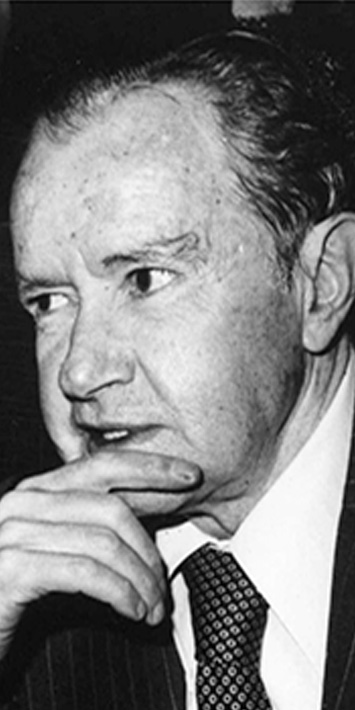
Juan Rulfo is one of the most influential writers in Mexican and Latin American literature. Although his body of work is relatively small, its impact has been profound, especially through his novel Pedro Páramo and his short story collection El llano en llamas.
Why Juan Rulfo Matters in Spanish Literature
Rulfo’s writing is considered foundational in modern Latin American literature. His work helped shape narrative techniques and themes that later influenced major authors of the region.
- Author of one of the most influential novels in Latin America
- Key precursor to magical realism
- Strong influence on writers such as Gabriel García Márquez
- Central figure in Mexican literary identity
What Makes His Writing Unique
Rulfo’s style is concise yet complex. His narratives often blur the line between life and death, reality and memory, creating a distinctive reading experience.
- Nonlinear storytelling with shifting perspectives
- Frequent use of silence, absence, and minimalism
- Blending of the living and the dead in narrative voice
- Strong regional and cultural atmosphere
Understanding Pedro Páramo
Published in 1955, Pedro Páramo tells the story of a man who travels to a remote town in search of his father, only to discover a place inhabited by voices and memories of the dead.
The novel explores themes such as memory, identity, and the lasting impact of the past, often through fragmented narration and multiple voices.
Is Juan Rulfo Suitable for Spanish Learners?
Rulfo’s work is not intended for early-stage learners. His writing requires a high level of comprehension due to its structure and subtlety.
- Complex narrative structure and fragmented storytelling
- Abstract and symbolic language
- Cultural and historical references
- Requires strong reading endurance
Key Works to Explore
These works define Rulfo’s contribution to literature and are widely studied.
Pedro Páramo
by Juan Rulfo
A landmark novel in Latin American literature, published in 1955. The story follows Juan Preciado’s journey to find his father, unfolding through fragmented timelines and multiple voices.
Known for its dream-like structure and blending of memory and reality, it is considered a foundational work for advanced readers exploring literary Spanish.
El llano en llamas
by Juan Rulfo
A collection of short stories centered on rural life in Mexico during periods of social and political conflict. The narratives explore themes such as inequality, land struggles, and human hardship.
The use of regional language and character-driven narration makes this work valuable for advanced learners seeking exposure to authentic literary Spanish.
When to Read Authors Like Juan Rulfo
At SpanishBlackbelt, this level of literature is considered part of advanced, mastery-level training. It is not included in earlier stages, where the focus is on building practical conversational skills.
Once a learner reaches a high level of fluency, reading Rulfo can deepen understanding of subtle language, tone, and literary expression.
How Literature Supports Advanced Spanish
At advanced levels, literature becomes a tool for refining comprehension and interpretation rather than building basic communication skills.
- Enhances understanding of nuance and ambiguity
- Expands exposure to regional language and style
- Strengthens interpretation of complex narratives
- Provides cultural and historical insight
The Role of Conversation at the Advanced Level
Even at a high level, reading alone does not ensure fluency. Understanding complex texts does not automatically translate into effective communication.
Discussing literature with a native Spanish-speaking tutor helps transform passive understanding into active language use and reinforces clarity of expression.
A Balanced Approach to Mastery
Juan Rulfo’s work offers a rich and challenging experience for advanced learners. However, it is most effective when combined with continued speaking and listening practice.
This balance allows learners to engage deeply with Spanish literature while maintaining the ability to communicate naturally and confidently.
Biografía
Juan Rulfo se crió en el seno de una familia de terratenientes del Méjico rural. Sus padres murieron cuando él era muy joven, y tuvo que pasar parte de su niñez en un orfanato. Fue testigo de episodios tristes y violentos de la historia de Méjico, como la Guerra Cristera y la Revolución mejicana, con la que su familia perdió gran parte de sus bienes. A la edad de 16 años, Juan Rulfo se mudó a la ciudad de Méjico donde viviría el resto de sus vida. La niñez de Juan Rulfo estuvo marcada por numerosos eventos trágicos que después se convirtieron en una importante fuente de inspiración para su trabajo.
Su primer libro, El llano en llamas, fue una colección de relatos cortos sobre la vida rural en Méjico durante el periodo de la Revolución y la Guerra Cristera. A esta publicación le siguió su célebre trabajo, Pedro Páramo, una novela sobre la vida de un hombre que viaja a su pueblo natal para encontrar a su padre, pero a su llegada todo lo que se encuentra es un pueblo fantasma. A pesar de la moderada atención inicial, Pedro Páramo se convirtió con el tiempo en una de las novelas más aclamadas del siglo XX.
A pesar de su corta producción, este escritor mejicano fue considerado uno de los mejores novelistas y creadores de relatos de América Latina. Y cuenta con admiradores como Carlos Fuentes, Jorge Luis Borges, Gabriel García Márquez, Gao Xingjian, Susan Sontag y muchos más.
Biography
Juan Rulfo grew up in the Mexican rural countryside in a family of landowners. His parents died when he was very young and he had to spend some time in an orphanage. He witnessed grim episodes of the Mexican history such as the Cristero War and the Mexican Revolution, where his family also lost most of its possessions. At age 16, he moved to Mexico City where he lived the rest of his live. Rulfo’s childhood was marked by tragic events that later became a critical source of inspiration for his work.
His first book, El llano en llamas, was a collection of realistic short stories around the Mexican rural life around the time of the Mexican Revolution and the Cristero Rebellion. Approximately four years after this publication, Juan Rulfo finished Pedro Páramo, a novel about a man who travels to his hometown to find his father, but all he finds is a ghost town. Despite the moderate attention that it got at the beginning, Pedro Páramo, became over the years one of the most acclaimed novels of the XX century.
Despite his short production, this Mexican writer is considered one of the finest novelist and short-story creators in Latin America. Some of his admirers include Carlos Fuentes, Jorge Luis Borges, Gabriel García Márquez, Gao Xingjian, Susan Sontag and many more.
Estilo
Juan Rulfo fue uno de los padres del realismo mágico. En Pedro Páramo, Rulfo describe un universo muy particular en el cohabitan lo real y lo misterioso. Sus trabajos muestran la vida rural de un Méjico caciquil, lleno de misterios en el que los mitos, las obsesiones y las fantasías se entrelazan.
Style
Juan Rulfo pioneered the style of magic realism with this novel Pedro Páramo, making the real and the mysterious cohabit. His literary work shows a life in rural Mexico with their backwardness and miseries in a mixture of myths, obsessions and fantasies of Mexican chiefdom.